Showing posts with label Fruit. Show all posts

Raw Mango Berry Fruit Tart

     I started writing a big long essay about Passover and making food choices that no longer enslave others, and about freedom from our addictive and unhealthful food choices. But I know you all would be likely to skip over it because this tart is just so darn pretty. Those are extremely important issues to me though, so I will be revisiting this post soon. In the meantime, here you go...
     Let me just say that, believe it or not, this tart really tastes even better than it looks. Plus, it's made entirely of whole, unprocessed ingredients--literally just fruit and nuts. It's raw, gluten-free, oil-free, and has no added sugar. And, of course, it's kosher for Passover.

     Best.  Dessert.  E V E R! 

Ingredients:
2 cups walnuts
1 cup pitted dates
1/4 shredded unsweetened coconut, divided
2 mangos
1/2 cup dried mango, soaked in water for at least 10 minutes
1 ripe banana
Fruit of your choice (I used baby kiwi, blueberries, strawberries, blackberries, and raspberries.)

Instructions:
1. Add the walnuts, dates, and half the coconut to a food processor and pulse till somewhat smooth. It doesn't need to be as pureed as peanut butter, but it shouldn't be too crumbly either.
2. Spread the rest of the coconut onto the bottom of a pie pan. Press the walnut-date mixture evenly into the bottom and sides of the pie pan to form the crust. Cover with plastic wrap and place in the freezer for 15-20 minutes.
3. In the meantime, blend the dried and fresh mango and banana until completely smooth. Pour onto the crust and place back in the freezer for about an hour.
4. Cover with fruit and place in the fridge until ready to serve. (Depending on how long that is, there will be some variation in terms of firmness when slicing. Mine was pretty messy but it really didn't matter because it tasted so good. You can always keep in the freezer longer and then let it de-thaw for 30-60 minutes before serving if you want it firmer.)

eHow Video: "Healthy Recipe for Carrot Cake With Cream Cheese Topping"

     I love words. I really do. But sometimes, when something is just so good, words are not enough. They just aren't. I could try and talk about how this cake is surprisingly low in added sugar, and that most of its sweetness comes from whole fruit. Or I could talk about how it's very high in fiber, beta-carotene, potassium, B vitamins and omega-3's, while also being completely free of cholesterol (and any other harmful animal products, as always). But I think you'll get a better sense of how unbelievably outstanding this carrot cake is if I tell you that everyone who tries it for the first time eats the first few bites silently with their eyes closed.
     Yes. It is *that* good. 

Cake Ingredients:
2 cups oat flour
2 1/2 cups carrots, shredded
3 teaspoons baking soda
1/4 cup brown sugar
1 cup applesauce, unsweetened
1 cup pineapple, blended
1 banana, mashed
1 teaspoon cinnamon
1 dash cayenne
1 teaspoon vanilla extract
1 cup raw walnuts, chopped
1/2 cup shredded coconut
1 cup raisins

Frosting Ingredients:
1 cup raw cashews, soaked in warm water for at least 2 hours
1/2 cup water
1/4 cup agave
1 teaspoon vanilla
3 tablespoons lemon juice

Instructions:
1. Preheat the oven to 350 degrees.
2. In a small bowl, mix oat flour and baking soda.
3. In a larger bowl, beat the sugar, pineapple, banana, and applesauce together. Add cinnamon, cayenne, and vanilla and mix thoroughly.
4. Add the flour mixture along with the chopped walnuts and shredded coconut to the larger bowl and mix. Add the shredded carrots and raisins till fully combined.
5. Spread the batter in a nonstick pan. Bake for about 50 minutes or until a toothpick inserted into the center comes out clean.
6. While the cake is baking, add all the frosting ingredients to a blender. Process until completely smooth. Using a spatula, scoop the frosting into a small bowl and place in the fridge to chill.
7. Once the cake has fully cooled, spread the frosting on top. Best served chilled.

My eHow Video Series: Sweet Potato Puree Smoothie

     Who doesn't love sweet potatoes? They are the candy of the vegetable kingdom. And that means they are a wonderful ingredient to put in smoothies!
     Athletes and body builders ought to take note. Sweet potatoes are an incredibly rich source of carotenoids, powerful antioxidants that aid with muscle cell recovery and help promote muscle growth. This sweet potato puree smoothie makes an ideal post-workout recovery drink. I also think it's great for breakfast, and even dessert! Watch and enjoy :)

Sweet Potato Puree Smoothie -- powered by ehow

Ingredients:
1/3 cup pureed sweet potato (I use canned)
1 banana
3 medjool dates
your favorite plant-based milk
dash of cinnamon 

Instructions:
1. Blend!


Disease Prevention for Breakfast


    Google image search "American breakfast" and you'll see a pretty sorry state of affairs. You'll see bacon strips, scrambled eggs, fried eggs, sausage, fried hash browns, fried ham, pancakes with butter, waffles with butter, toast with butter, buttered croissants, bagels with cream cheese... you get the idea. Google image search "healthy american breakfast" and you'll see practically the same thing. You'll get a couple more shots of orange juice (which by definition has been entirely striped of fiber) and some shots of highly refined cereal floating in bowls of dairy milk, but essentially the same thing. No greens, almost no fresh fruit, and A LOT of meat, dairy, eggs, refined flour, refined sugar, and salt.
     This is absurd when diet is responsible for four out of the top five leading causes of death in America. As Dr. Mark Hyman explains, "the research clearly shows that changing how we live is a much more powerful intervention for preventing heart disease [currently the number one killer of Americans] than any medication." The "EPIC" study published in the Archives of Internal Medicine studied 23,000 people's adherence to 4 simple behaviors (not smoking, exercising 3.5 hours a week, eating a healthy diet [fruits, vegetables, beans, whole grains, nuts seeds, and limited amounts of meat], and maintaining a healthy weight. In those adhering to these behaviors, 93% of diabetes, 81% of heart attacks, 50% of strokes, and 36% of all cancers were prevented.
     We know Americans don't want to suffer and die from these diseases; after all, we spend an exorbitant amount of our personal and national finances on prescription drugs, medical procedures, and research to treat them. So why do we continue to eat in a way that contributes to the very diseases we are spending so much money to treat? It's as if we believe our only chance at good health is to sit around and wait for cures to be discovered. This hopelessness and helplessness leaves us completely dependent on doctors, hospitals, drug companies, and research labs--which is very nice for them and their wallets but not so nice for our health, our wallets, or the country.
     Why have so many of us been led to believe we have no power over our own health? Why are too many of us still tragically unaware (as I was for so long) of the role diet plays in determining whether or not we get cardiovascular disease, cancer, osteoporosis, and a number of other diseases?
    In hindsight, it would be way too easy for me to say, "well, the information is out there. If people really cared about their health, they wouldn't be eating meat, dairy, and eggs." But I don't think it's that simple. While, indeed, research has proven time and time again that animal products promote disease while fruits and vegetables prevent disease, not many people know this. We hear mixed messages from advertisements ("Milk. It Does a Body Good."), from fad diets (Atkins), from our parents (who were misled by their parents), and from myths passed amongst our peers ("Humans are meant to eat animals. Look at our pointy fangs!" ). Most insidious, though, are the messages we receive from the medical industry itself which consistently plays down the power of eating for disease prevention.
     Why are doctors all too eager to write us prescriptions for high cholesterol, screen us repeatedly with expensive medical equipment for cancer (which is NOT prevention, just detection), perform surgeries to unclog our hearts, or put us through chemotherapy, but they'll rarely advise us to drastically change our diets? I find the explanation that "most people refuse to make drastic lifestyle changes" to be both patronizing and false. Perhaps some people may refuse to make changes in their diet, but we all deserve to make an informed choice. Plus, I believe most people would prefer not to spend gobs of money unnecessarily, or get their chest cut open unnecessarily, or get cancer and endure chemo unnecessarily, or DIE unnecessarily. Based on my experience, I believe plenty of people would much prefer to make dietary changes if the truth were pushed on them even half as much as prescriptions are.
     Why is the link between diet and disease so rarely mentioned?

Black Bean Brownies!

    I know these sound a little weird, but trust me, they are THE. BEST. Because black beans have a neutral flavor they essentially function as the flour in this recipe. I've started eating them every day with my green breakfast smoothie.
     Yes, I eat brownies every day. Don't judge.
     Besides the semi-sweet chocolate chips, these brownies have no processed sugar and are instead sweetened with dates, stevia, and a banana. Black beans are high in protein; an excellent source of folate, magnesium, phosphorus, manganese, and thiamin; and they are rich in dietary fiber. Unsweetened cocoa powder also provides protein, fiber, phosphorous, magnesium, and manganese as well as riboflavin, zinc, iron, potassium, and copper.
     So, YEAH, I eat brownies every day.
     Many of the black bean brownies recipes I've found use oil; however, I prefer to use water and don't really notice a difference in texture. These brownies are more fudgey than cakie, which I like, but if you prefer cakie just add less water. I recommend using your own soaked, cooked, and drained black beans rather than canned beans to avoid excess water. (I used canned beans recently while visiting my in-laws down South and it resulted in a soupy batter. This was unfortunate as they were already skeptical enough about trying my crazy vegan brownies with beans so I was disappointed I made a batch that didn't live up to their usual mouthwatering goodness. Arg! Regrets!!) If you refuse to heed my wise advice, then at least fully drain the liquid from the cans and maybe ease up on the amount of water you add. Also, be sure the cans say "no added salt."
     While I personally don't want to mess with perfection, these would certainly also be good with some nuts like pecans and walnuts. Enjoy!!

Ingredients:
4 cups black beans
1 banana
15 medjool dates
1/2 cup unsweetened apple sauce
1 cup unsweetened cocoa or carob powder
1 tablespoon vanilla extract
1 cup water
1 cup semi-sweet vegan chocolate chips* (optional)

Instructions:
1. Preheat the oven to 350 degrees. Line a glass baking dish with parchment paper.
2. Put all the ingredients except the chocolate chips into a food processor. Pulse until creamy.
3. Spread the batter into pan and sprinkle the chocolate chips evenly on top.
4. Cook for 35-45 minutes, or until a knife comes out clean(-ish) after inserting. Don't cook more than 50 minutes even if your knife comes out with batter. Just remove pan from stove and allow it to cool completely. Store in the fridge.

* Chocolate IS vegan! After all, cocoa comes from a bean. However, many lower quality chocolate companies add non-vegan ingredients like milk and milk fat. Higher quality dark chocolate chips are often vegan even if they don't announce it on the package. They'll be made with pure, simple ingredients: cocoa, cocoa butter, lecithin, sugar, and sometimes vanilla. So just check the back and read the ingredients. Here's some more info from Food Empowerment Project on vegan chocolate that's also slavery-free.

July 4th Vegan Breakfast-for-Dinner!

     Robert's brother, Clint, came to visit us at our new place in Boston over July 4th and had the excellent idea to celebrate the holiday with breakfast for dinner. I loved this idea because it allowed us to serve up lots of American classics with our own stamp of independence (read: everything was vegan). Another huge plus was that all our banging around in the kitchen and chatter drowned out most of the fireworks so Gubie had his very first non-suicidal July 4th. A revolutionary evening indeed!

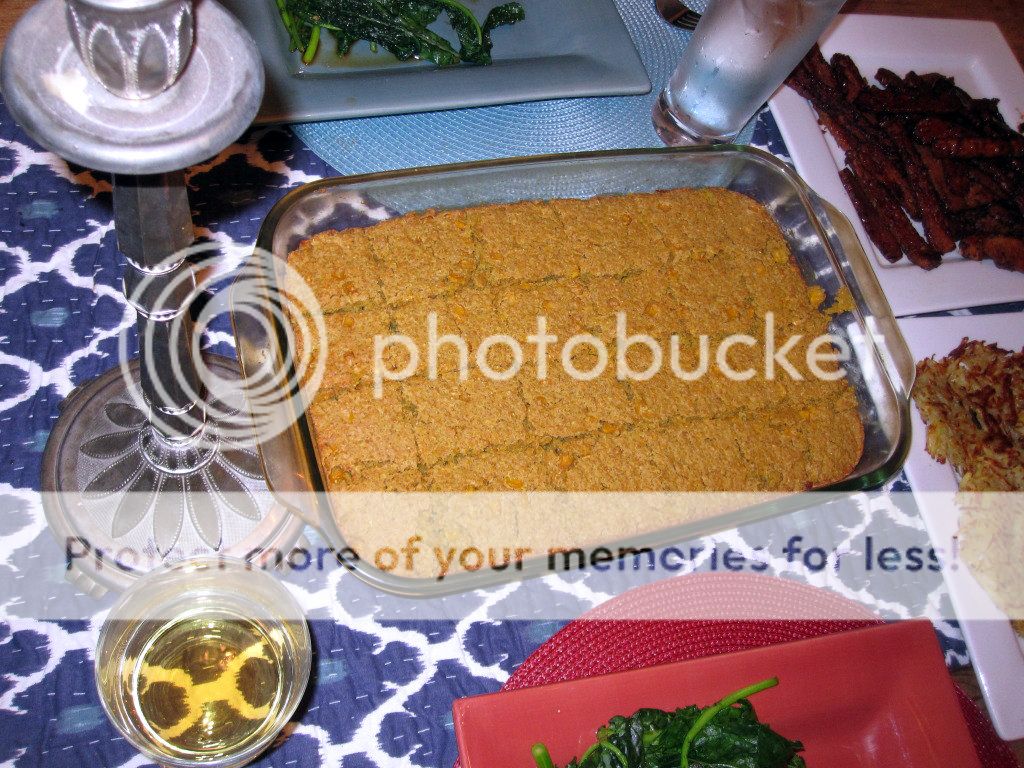
QUINOA CORN BREAD
Ingredients:
1 cup quinoa
2 cups water
1 cup fresh corn kernels
1 1/4 cups cornmeal
1/3 cup spelt flour
1 tablespoon oat flour
1 tablespoon brown rice flour
1 1/4 tablespoons baking powder
1 teaspoon baking soda
1 teaspoon sea salt
1 tablespoon unrefined sugar
1 cup soy milk
1/3 cup maple syrup
1/3 cup unsweetened applesauce
1 tablespoon flax eggs (a fantastic egg substitute: place 2 parts warm water and 1 part ground flax seeds in a blender and blend at high speed for about a minute or until the mixture becomes gelatinous. Will keep, covered, in the refrigerator for up to 2 weeks.)

Instructions:
1. To make the quinoa, first toast quinoa on a dry pan over high heat for 2 minutes. Add 2 cups of water and bring to a boil. Reduce heat to low, cover, and simmer for 18-20 minutes until quinoa is fluffy.
2. Preheat oven to 350 degrees and get out a 13x9x2-inch baking pan.
3. In a large mixing bowl, combine the corn, cornmeal, flours, baking powder, baking soda, salt, and sugar. In a separate bowl, mix together the soy milk, maple syrup, applesauce, and flax eggs. Add the wet ingredients to the flour mixture and stir well to combine. Stir in the cooked quinoa. Pour the mixture into the prepared pan and bake for 30-35 minutes, or until a toothpick inserted in the center comes out clean.

DINER-STYLE PANCAKES
Ingredients:
1 1/4 cups sifted unbleached white or spelt flour (for gluten-free, use oat flour)
2 1/2 teaspoons baking powder
2 tablespoons unrefined sugar
3/4 teaspoons sea salt
1 1/2 teaspoons flax eggs (see corn bread recipe for instructions) dissolved in 1 tablespoon soy milk
1 3/4 cups soy milk
1/2 teaspoon vanilla extract
3 tablespoons canola oil, plus more for cooking the pancakes
maple syrup (optional)

Instructions:
1. In a large mixing bowl, combine the flour, baking powder, sugar, and salt. In a separate bowl, combine the dissolved flax eggs, soy milk, vanilla extract, and oil. Mix ingredients from both bowls together, stirring well to combine. 
2. In a large skillet over medium heat, heat some oil. Drop large spoonfuls of batter onto the skillet, leaving room for the pancakes to expand. Cook until the bottoms are golden and bubbles are popping on the surface, about 2-3 minutes. Flip the pancakes and cook until golden. Repeat, using up all the batter.

TEMPEH BACON + HASH BROWNS + HOMEMADE KETCHUP
I used Colleen Patrick-Goudreau's tempeh bacon recipe and used the remaining marinade to saute the greens. We served our homemade ketchup with the hash browns. Here's the recipe for the hash browns:

Ingredients:
3 lbs. yukon gold potatoes, grated
3 tablespoons canola oil
Salt and pepper to taste

Instructions:
1. Heat oil in a large frying pan over medium-high heat.
2. Add the grated potatoes in loose patties or piles, no more than a half inch think. Sprinkle some salt and pepper on top. After a few minutes, check the underside for doneness. Once they are golden brown, use a large spatula to flip the patty and fry till golden brown on the other side. Repeat with all patties.


RED, WHITE, AND BLUEBERRY CHEESECAKE
For this recipe I added blueberry frosting and fresh strawberries to my raw vegan cheesecake. Here's the recipe for the frosting:

Ingredients:
1 cup raw cashew pieces, soaked overnight
1 cup water
4 tablespoons agave syrup
1 teaspoon vanilla extract
1/4 cup coconut oil, melted
1 cup blueberries

Instructions:
1. Pulse the cashews in a food processor until crumbly. Add the water, agave, and vanilla and blend until smooth. With the food processor running, stream the coconut oil in through the top until combined. Add blueberries and puree till smooth.
2. Spread on top of the cheesecake with a spatula before putting in the freezer as instructed.

Dark Chocolate Coconut Cookies! Rawr!

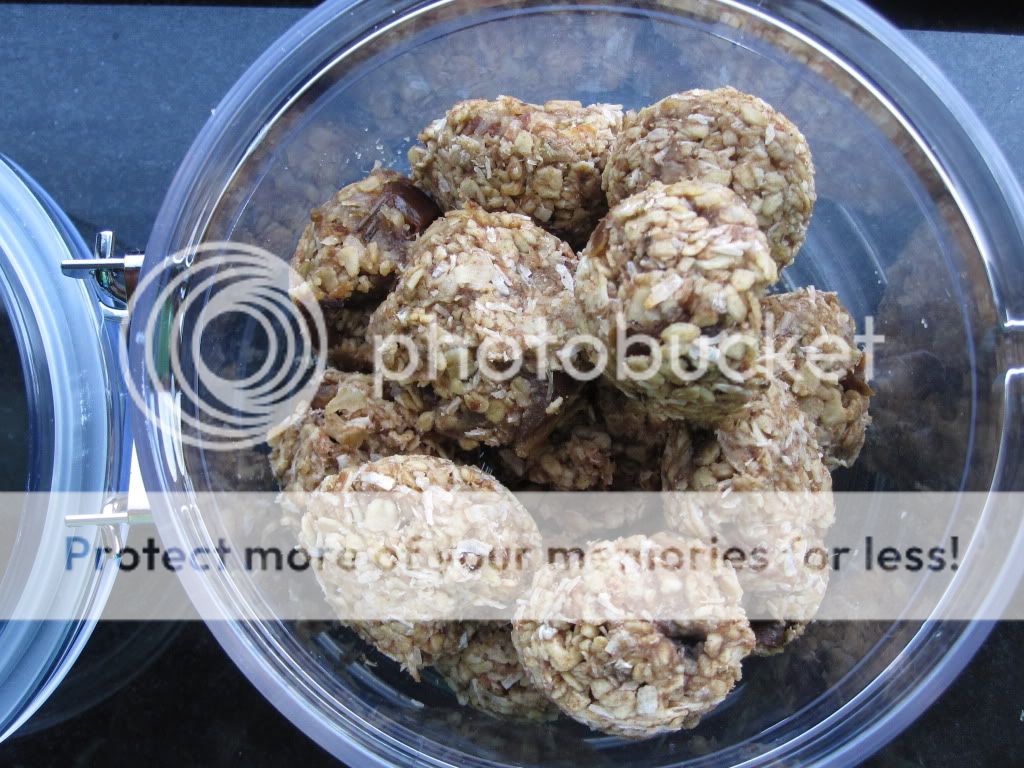
     We love our oatmeal chocolate chip cookies but we wanted to mix it up a bit and have something that would make for a healthier pre-workout snack. Well, oh my lord, these are incredible! Wow! They taste just like moist brownies. But, believe it or not, they have very little added sugar and require no baking, and include the health-promoting ingredient maca, which means we can better justify indulging in several cookies on a daily basis.

Ingredients:
Makes about 18 cookies.
(Some of these ingredients may require a visit to a health food store or the "green" section of your supermarket. Or you can use the links I've provided and order the ingredients online. Trust me, these are so good, it's worth it!)
1/2 cup shredded coconut
2/3 cup coconut flour
4 tbsp cocoa powder
4 tsp maca powder
3 tbsp agave nectar
4 tbsp almond butter
1 tsp vanilla extract
12 large Medjool dates, pits removed
3/4 cup dark chocolate chips

Instructions:
1. Heat a small frying pan over low heat and add the coconut. Toast coconut until it has turned an amber color, about 1-2 minutes, stirring constantly. Remove from heat.
2. Place the toasted coconut, coconut flour, cocoa powder, maca, and agave into a food processor and start the machine.
3. Add the almond butter and vanilla extract, then one at a time, add the pitted dates and process until a crumbly dough has formed. The dough should be, well, doughy. Like a thick cookie dough. If too wet, add additional coconut flour. If too dry, add water, a little at a time, until optimal doughiness is achieved.
4. Transfer to a bowl and mix in the dark chocolate chips. Using clean hands, grab about a table spoon and squeeze and roll to form a tight ball. Flatten the ball using your palm to form a small cookie. You're welcome!

Apple Cinnamon Energy Bars


These energy bars are a staple in our house. Robert brings two to work everyday. The recipe comes from Thrive: The Vegan Nutrition guide to Optimal Performance in Sports and Life by Brendan Brazier, the professional ironman and triathlete. Unlike commercial energy bars which provide sugary stimulation from highly-processed ingredients, these homemade bars provide real nourishment that delivers sustainable energy. We wrap them individually and store them in the freezer. They wont freeze solid (no thawing necessary) but will maintain their chewiness so they are perfect to bring along on a hot or cold day.

Ingredients:
1 small apple, cored
1 cup dried dates
1/2 up cooked quinoa
1/4 cup almonds
1/4 cup ground flaxseed
1/4 cup hemp protein
2 tsp cinnamon
1/2 tsp nutmeg

Instructions:
1. In a food processor, process all ingredients together to desired mushiness.
2. Shape into balls or bars. Wet hands with water while shaping to prevent sticking. Recipe yields about 12 bars.

Wholehearted Granola

     Can granola motivate you to get out of bed in the morning? This one sure can! Yes, it is that good. Not only will you adore the taste, but it's packed with fiber, protein, and essential fatty acids so it'll leave you well-nourished and well-satiated for hours. I love eating it dry while Robert usually eats it with almond milk. Either way, it's good stuff!

Ingredients:
1 apple, diced
2 cups oats
1 cup sunflower seeds
1 cup ground flaxseed
1 cup hemp protein
1 cup unhulled sesame seeds
1 cup raw almonds, diced
3 tsp cinnamon
1/2 tsp nutmeg 1 packet ground stevia leaf (1/2 tsp)
1/2 tsp sea salt
1/2 cup molasses

Instructions:
1. Preheat oven to 250 degrees.
2. Combine all the ingredients in a bowl and mix well.
3. Spread on a baking tray lined with parchment paper. Bake for 1 hour or until toasted. Let cool and store in the fridge.

Source: I adopted this recipe from Thrive: The Vegan Nutrition Guide to Optimal Performance in Sports and Life by Brendan Brazier. The only part I changed was omitting the oil.

Tempeh with Cherry Balsamic Reduction Sauce

     This week I have been experimenting with some fancy vegan dishes to serve at my parents' Passover seder. This dish definitely fits the bill. The colors and flavors are so rich and romantic. And it's so easy to prepare that it shouldn't be limited to special occasions.

Ingredients:
1 package tempeh, cut into 1/2-inch strips
3-4 tablespoons olive oil, divided
2 tablespoons water
3 tablespoons granulated sugar
1 cup fresh halved cherries or 1/2 cup dried cherries
3 tablespoons balsamic vinegar
1 yellow onion
4 cloves garlic
1 cup dry red wine
1/2 cup vegetable stock
1/2 cup nondairy milk (such as almond, soy, rice, hazelnut, hemp, or oat)

Instructions:
1. Steam the tempeh for 10 minutes in a steamer basket placed in a pot filled with a small amount of water.
2. Heat a large skillet with 2 tablespoons of the olive oil over medium-high heat and sear the tempeh until it's crispy on one side, about 5 minutes. Turn and do the same on the second side. Each side should be golden brown.
3. Remove the tempeh fro the skillet and set aside on a plate lined with paper towels (to absorb some of the oil).
4. In a small saucepan, combine the water and sugar and gently stir over medium-high heat until the sugar is completely dissolved.
5. Immediately remove the pan from the heat and stir in the cherries and balsamic vinegar. (If the sugar hardens after you add the cherries and vinegar, just return the saucepan to low heat and gently stir until the sugar melts once more.) Remove the pan from the heat and set aside.
6. Meanwhile, in the skillet you used for the tempeh, heat the remaining 1-2 tablespoons olive oil, and add the onion and garlic. Saute until the onion turns translucent, about 5 minutes.
7. Add the wine, bring the mixture to a boil, and boil until reduced to around 2/3 cup.
8. Add the stock, return the mixture to a boil, and cook until reduced to 2/3 cup again.
9. Stir in the milk and the cherry mixture and cook for just 5 more minutes until it's reduced a little more and thickened up.
10. Divide the tempeh between 2 plates and top with the sauce. Enjoy!

Source: Color Me Vegan

Banana Oat Date Cookies

       These cookies have no added sugar, but you'd never know it because the dates and bananas provide just the right amount of sweetness. They make for a healthy option for a snack, breakfast on the go, or dessert. I show you how to make them oil-free as well :)

Ingredients:
3 large ripe bananas
1 teaspoon pure vanilla extract
1/4 cup canola oil (for an oil-free option use 1/4 cup unsweetened apple sauce instead)
2 cups rolled or quick-cooking oats
1/3 cup unsweetened shredded coconut
1/2 teaspoon ground cinnamon (More if you like cinnamon a lot. Sometimes I do 1 tsp.)
1/2 teaspoon salt
1 teaspoon baking powder
6 or 7 large dates, chopped

Instructions:
1. Preheat the oven to 350 degrees. Coat a baking pan with canola oil or line with parchment paper.
2. In a large bowl, mash the bananas with a fork until smooth.
3. Add the vanilla, canola/apple sauce, oats, coconut, cinnamon, salt, and baking powder and mix with your hands or a fork until fully combined.
4. Fold in the chopped dates.
5. Using a tablespoon spoon (is that what it's called?) scoop out heaping dollops of the dough onto the baking pan. You could also use your hands but I thought the round shape created by the tablespoon spoon was really cute. (Note: The cookies wont spread very much so they can be placed closely together.)
6. Bake for 15 minutes or until the cookies are golden brown on the bottom. Depending on your oven, it could take up to 30 minutes.

Source: This is an oil-free version of a recipe in "Color Me Vegan" by Colleen Patrick-Goudreau

Caribbean Plantain + Pinto Stew

     I used to think plantains were just old bananas that supermarkets kept in stock in hopes that people would buy them to make banana bread. When I moved to Brooklyn and noticed that even the smallest quickie mart carried these black bananas I just thought people in Brooklyn must really have a thing for banana bread. Silly me! As the rest of the world probably knows already, plantains are a major component of Latin American and Caribbean cuisine, and are used in soups, stews, and desserts. I was completely blown away by the combination of flavors in this stew--both sweet and spicy--and owe many of my thanks to the plantains. This recipe definitely goes on my list of top favorites.

Ingredients:
1 large yellow onion, chopped finely
1 yellow pepper, chopped finely
2 jalapenos, seeded and chopped finely
3 cloves garlic, minced
8 plum tomatoes, diced
1/4 cup cooking sherry (any cooking wine will do, or sub vegetable broth)
1 teaspoon salt
2 teaspoons ground cumin
1 (15 oz) can pinto beans, drained and rinsed OR 2/3 cup dried pintos, soaked overnight
2 ripe plantains, peeled, sliced in half lengthwise, and sliced into 1/2-inch pieces
1 cup chopped fresh cilantro

Instructions:
1. If using the soaked beans: place beans in a pot with fresh water and bring to a boil, then reduce heat to low and let simmer, covered for 60 minutes. If using canned beans, continue directly to step 2.
2. In a soup pot over medium heat, saute the onions, peppers, jalapenos, and garlic for 5-7 minutes, until the vegetables are softened.
3. Add the tomatoes, sherry, salt, and cumin. Cover and bring to a boil, then let simmer for 15 minutes, stirring occasionally, until the tomatoes are cooked and broken down.
4. Add the pinto beans and plantains. Cover and simmer for another 20-25 minutes.
5. Ladle into serving bowls and garnish with cilantro.

Source: Inspired by a recipe in "Veganomicon"

Golden Rice with Curried Apricot Dressing

     This dish is similar to paella but it has more sweetness in flavor. The apricot dressing is loaded with richness and spice, and makes the whole rice mixture really creamy. This recipe could easily satisfy 4 people, but keep in mind that before we started eating we were certain there would be leftovers but it was so good that we didn't want to stop eating. But hey, that's another great thing about eating a plant-based, whole foods diet-- it's all good-for-you stuff, so helping yourself to seconds (and thirds and fourths) is fine!

Update: I tried adding a can of chickpeas to this dish and really enjoyed it. It's delicious either way, but I now prefer it with the chickpeas.

Ingredients:
1 tablespoon water or vegetable stock, for sauteing
1 medium sweet yellow onion, finely diced
2 cloves garlic, minced
1 teaspoon ground cumin
1 teaspoon fennel seed
1/4 teaspoon freshly ground pepper
1/2 teaspoon salt, or to taste
2 cups uncooked brown basmati rice
2 teaspoons turmeric
3 1/2 cups vegetable stock
3 large carrots, peeled and chopped
1 tart apple, diced and tossed with lemon juice
3 scallions, thinly sliced
Curried Apricot Dressing
1/4 cup apricot preserves
1/3 cup rice vinegar
1 tablespoon curry powder
1/4 teaspoon ground cardamom
1/4 teaspoon cayenne pepper
2/3 cup water

Instructions:
1. In a medium saucepan, heat the water or stock over medium heat and saute the onion and garlic until just softened, about 5 minutes.
2. Add the cumin, fennel seed, pepper, and salt. Saute for 1 minute.
3. Add the rice and stir constantly for 2 minutes or until the rice smells fragrant.
4. Add the turmeric and the 3 1/2 cups vegetable stock. bring to boil and cover.
5. Reduce heat to low and simmer for 40-45 minutes or until the liquid is absorbed.
6. Meanwhile, to make the dressing combine all the ingredients in a blender or food processor and blend until emulsified. Taste and adjust the seasonings.
7. After step 5 is done, remove the pan from heat and add the carrots, apple, and scallions. Stir so everything is all mixed in and then transfer to a large serving bowl.
8. Pour most of the dressing onto the rice and mix thoroughly. Taste and add the rest of the dressing, if desired, or reserve for another use. Serve, savor, and enjoy!

Source: This is based on a recipe from Colleen Patrick-Goudreau's "Color Me Vegan". (Her recipe calls for saffron, which I had planned to use but forgot to purchase. I used turmeric instead and we loved how it turned out so I'll continue to make this dish with turmeric in the future. I also omitted the oil.) 

Robert's Power Breakfast! (And, Why You Don't Need Cow's Milk for ... Anything!)

     Did you know that humans are the only species on that planet that 1) drink the breast milk of another species, and 2) continue to consume milk far past weaning age?      
     I certainly didn't think about it like that until recently, but once I did, I got the heebie jeebies all over.
     The practice of consuming the milk of other animals is actually a fairly recent phenomenon in human history, and our bodies aren't built to handle it very well. After the first few years of life, we stop producing the enzyme lactase and lose our ability to digest lactose. It's no wonder so many people have trouble digesting milk (let alone the milk of another kind of animal) past weaning age. What is often called "lactose intolerance" (the inability to digest significant amounts of lactose after weaning age) shouldn't be thought of a disease. It's the normal "condition" for most human adults--a whopping 75% worldwide--because adults aren't babies, obviously, and no longer need to be able to digest milk
     Like most people, I thought humans consumed cow's milk to meet our calcium needs, but it's believed that the amounts of calcium consumed by humans in the late Paleolithic era were more than double the intakes of today--with no cow's milk at all. Humans evolved in a calcium-rich, salt-poor dietary environment, and our basic metabolism has changed little from that of our Stone Age ancestors. 
     Where did their calcium come from? Plants! That's right, calcium-rich plant food! Calcium-rich foods that are widely available today include kale, collard greens, broccoli, mushrooms, green beans, seaweed, romaine lettuce, (the list goes on!) as well as beans, nuts, and seeds. There's even some calcium in whole grains and fruits, which are already loaded with health benefits in their own right.
      There are lots of plant-based milks and yogurts out there (I eat plain soy yogurt every morning for breakfast). Robert has started drinking almond milk, which he uses in his daily breakfast smoothie. Almond milk is delicious and nutritious. It's free of cholesterol and saturated fat but contains omega fatty acids (that's the good stuff). It's rich in vitamins D, E, and A. It has high levels of magnesium, potassium, selenium and 30% of daily calcium needs in each cup. Robert absolutely LOVES this smoothie. He comes home from work every night and says something about how good his breakfast was. 

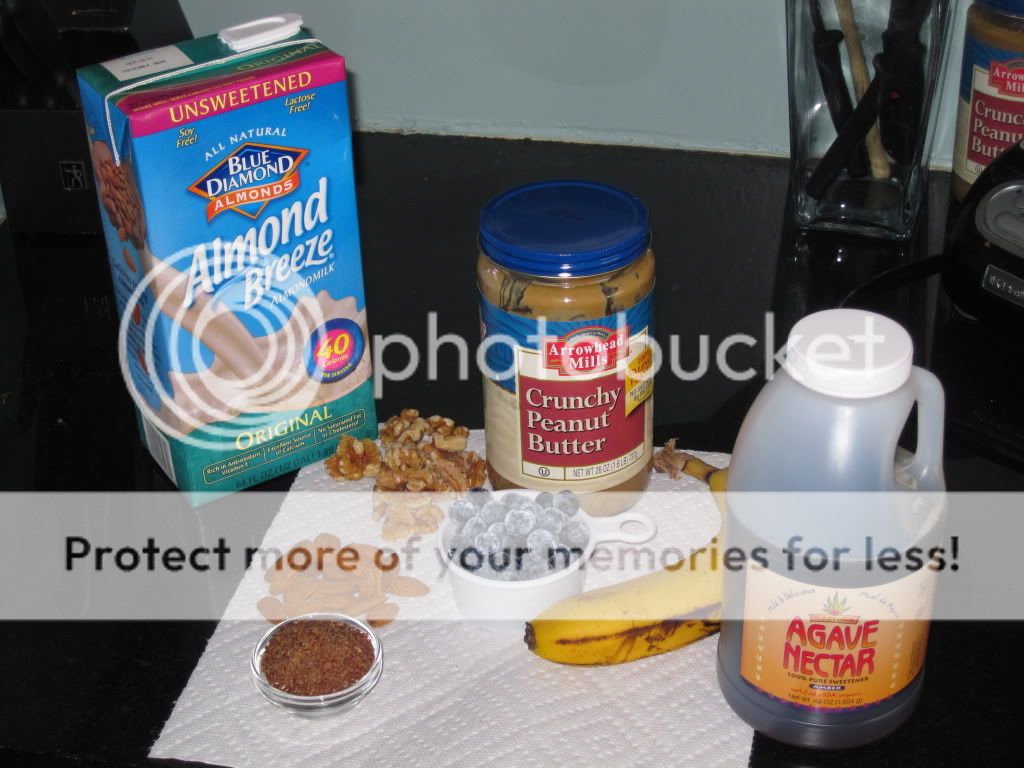
Ingredients (top photo, from left to right):
Almond Milk
Walnuts
Peanut Butter
Blueberries
Almonds
Ground Flax Seeds
Banana
Agave Nectar

Sources: 

Brussels Sprouts + Apples + Pecans

     Brussels Sprouts are so cute! They are also really nutritious, boasting high amounts of vitamins C and K, and containing an abundance of disease-fighting phytochemicals, including sulforaphane, which helps rid the body of carcinogenic substances.
     This dish was inspired by a recipe in "Color Me Vegan" by Colleen Patrick-Goudreau. I absolutely LOVE this cookbook and I think the author is awesome. Her podcast Vegetarian Food for Thought (which you can listen to for free) is so inspiring and informative. Not only is she well-versed in nutrition--which is why I started listening to her in the first place--but she also has helped me see that our food choices can be, and should be, an extension of who we are and what we value in life. It's such an empowering outlook. Her words have really broadened my perspective.

Kale Quinoa Salad

     We love this meal so much we probably have it twice a week, at least! It's what I make when I'm short on time or don't feel like putting too much thought into dinner. A "lazy lady's dinner," if you will.
     This salad is rugged. Yeah, that's right. I used "rugged" and "salad" in the same sentence. There is something about raw lacinato kale that is so strong and hearty and, well, rugged! Plus, kale is part of the cruciferous vegetable family, making it a true nutritional powerhouse. In fact, The World's Healthiest Foods Foundation describes kale as "one of the healthiest vegetables around." It has risk-lowering benefits for at least five types of cancers (bladder, breast, colon, ovary, and prostate) and has a cholesterol-lowering ability comparable to the prescription drug cholestyramine (a medication that is taken for the purpose of lowering cholesterol). That's a whole lot of nutrition in a meal that takes only 20 minutes at most!
     Tip: I keep a constant supply of Goldhouse Gold Dressing in my fridge. I always double or triple the recipe and store it in a HUGE Manischewitz bottle. (Don't ask... My husband loves Manischewitz.)  That way it's ready whenever I need it, which is pretty much all the time because it's SO good and it tastes delicious on practically everything.

(Serves 2 hearty eaters)

Ingredients:
1.5 cups dry quinoa
3 cups water
1 bunch of kale
1/4 cup shelled pistachios or walnuts, roughly chopped
1/2 cup dried cherries, raisins, or dried currants
Goldhouse Gold Dressing

Instructions:
1. Place quinoa in a dry medium saucepan and toast over medium-high flame for 3 minutes. Add water and bring to a boil. Then reduce heat to low and cover for 18-20 minutes until each quinoa has a curly little tail. It should be very fluffy like cooked couscous, not wet or porridge-y.
2. Meanwhile, finely chop the kale and place into a large salad bowl. Add the nuts and dried fruit of choice.
3. When the quinoa is done add it to the kale mix. Drizzle with Goldhouse Gold Dressing and fresh pepper to taste. De-lish!

Sources: http://www.whfoods.com/genpage.php?tname=foodspice&dbid=38

Citrus Tofu + Asparagus

     Tofu is Asian in origin and is a staple of Asian cuisine, so understandably a lot of tofu recipes tend to include other typical Asian ingredients such as soy sauce and ginger. While these kinds of tofu dishes are delicious, the same combination of flavors can start to feel repetitive if you're eating a lot of tofu.
     But tofu need not be so limited! Case in point...
     In this recipe tofu is prepared with balsamic vinegar, basil, and orange juice. The result is a tangy dish that feels like it could come from an Italian or Greek cookbook. It's an easy dish to love, and a great reminder of just how versatile tofu can be.
Ingredients:
1 14-ounce package extra-firm water-packed tofu, rinsed
2 tablespoons red miso, divided
2 tablespoons balsamic vinegar, divided
4 teaspoons vegetable broth, divided
1 pound asparagus, trimmed and cut into 1-inch pieces
3 tablespoons chopped fresh basil (from the jar will be fine here too)
1/4 cup orange juice
1 teaspoon freshly grated orange zest
1/4 teaspoon salt

Instructions:
1. Preheat oven to 450°F. Coat a large baking pan with oilve oil or cooking spray.
2.  Pat tofu dry and cut into 1/2-inch cubes. Whisk 1 tablespoon miso, 1 tablespoon vinegar and 2 teaspoons broth in a large bowl until smooth. Add the tofu; gently toss to coat. Spread the tofu in an even layer on the prepared baking pan. Roast for 15 minutes. 
3. Gently toss asparagus with the tofu. Return to the oven and roast until the tofu is golden brown and the asparagus is tender, 8 to 10 minutes more.
4. Meanwhile, whisk the remaining 1 tablespoon miso, 1 tablespoon vinegar, 2 teaspoons broth, basil, orange zest, orange juice, and salt in the large bowl until smooth. 
5. Toss the roasted tofu and asparagus with the sauce and serve. 

 Source: eatingwell.com

Quinoa with Dried Apricots and Baby Spinach + Moroccan-Spiced Dressing

     Our new love affair with quinoa began with this very dish. It has has become one of my favorite recipes, not just because it's one of our very favorite to EAT but also because it's one of the easiest to make. The Moroccan-spiced dressing's sweet and lemony flavors harmonize all the different tastes and textures of the quinoa, apricots and spinach. Yum! (Serves 2-4 people)

Ingredients:
1 cup quinoa
5 cloves garlic, minced
1/2 cup dried apricots, coarsely chopped
2 cups water
1/4 teaspoon salt
8 cups baby spinach
Moroccan-Spiced Lemon Dressing:
1/4 cup lemon juice
2 tablespoons soy yogurt
1 1/2 teaspoons agave
1/4 teaspoon ground cumin
1/4 teaspoon ground cinnamon
1/4 teaspoon ground ginger
1/4 cup water
1/4 teaspoon salt, or to taste
Freshly ground pepper, to taste

Instructions:
1. Toast quinoa in a dry skillet over medium heat, stirring often, until it becomes aromatic and begins to crackle, about 3 to 4 minutes.
2. Add garlic with a dash of water and cook, stirring constantly, until golden, about 1 minute.
3. Add the chopped apricots and salt, and then the water. Bring to a boil. Reduce heat to medium-low and cover for 15-20 minutes or until all the liquid is absorbed and the quinoa is very fluffy.
4. While waiting for the quinoa to "fluffifize", make the Moroccan-Spiced Lemon Dressing.
5. Divide the spinach among 4 plates (or 2 plates if you are big eaters like us). Mound the quinoa salad on the spinach and drizzle the dressing on top.