Showing posts with label Fundamentals. Show all posts

eHow Video: Taco Salad (and some words on craving the familiar)

     My mother is an excellent cook and one of my favorite dishes of all time was her taco salad. It was colorful and fun, and so delicious that I always had countless servings each time we had it for dinner. Her recipe called for ground chicken, so it's been quite a while since I've had it. For a long time, I avoided attempting to make vegan versions of non-vegan dishes I loved because I knew I would always prefer the original. This isn't because the original actually tastes better; it's simply because it's familiar. We humans are designed to be weary and skeptical of difference and change. There is no risk in sticking to the familiar; it's safer and more comfortable. BUT, if we give change a chance, if we can get out of our comfort zone just a little bit and give ourselves time to readjust, what was once unfamiliar will eventually become familiar. This applies to all aspects of life, not just food, so keep it in mind next time you find yourself making comparisons between the known and the unknown or feeling hesitant about trying something new.
     Anyway, since it has been quite a while since I've had my mom's taco salad and I knew I wouldn't have the attachment to its familiarity that I would have had years ago, I decided to give a vegan version of this recipe a go. Instead of ground chicken, I used ground tempeh, and I added corn in lieu of the shredded cheddar cheese she would sometimes add. Everything else was the exact same.
     Well, I was totally impressed with how it turned out! I'll just be blunt: it was spectacular. The ground tempeh was absolutely delicious. Which makes sense because, after all, I applied the exact same seasonings as she would with ground chicken. And as I always say, humans don't crave the taste of plain flesh; we crave the seasonings, and those seasonings are plant-based! I really liked the corn, too. I had added it mostly for color but it provided pops of delicious sweetness that went really well with all the lime juice and the salsa. I probably make this once a week because now it is so tasty. And just like before, my stomach seems to hold serving after serving after serving. Thank goodness!
(Serves 4--unless you are an extremely big eater--ahem--in which case it would serve 2-3)
Ingredients:
1 package tempeh, grated
1 large onion, chopped
2 1/2 cups of black beans (1-15 oz can + 1 cup)
1-2 tablespoons taco seasoning (I prefer 2 tablespoons)
2 heads of romaine lettuce, chopped
1/2 cup cilantro
1 cup of halved baby tomatoes
1 cup of sweet corn
1 cup of salsa
Lots and lots of limes!

Instructions:
1. Saute the onions and tempeh with a tablespoon of water until brown, about 10 minutes.
2. Add 1 can of black beans and the taco seasoning, and saute for another 5 minutes. Remove the pan from the heat and let cool until room temperature.
3. Place the romaine, cilantro and baby tomatoes into a large salad bowl. Add 1 cup of black beans, the corn, salsa, and tempeh mixture and toss. Serve with lots of lime wedges to squeeze just before serving. 

eHow Video: Sweet Potato & Pinto Bean Burritos (and Some Words on Planning)

     "Things just don't happen by accident."
     This is a common saying in our house. It refers to my love of planning. Everyone in my life makes fun of me for this, but you know what? They all benefit from my planning. Planning is how things get done. Planning is how you make sure you have the best experience possible. Planning is how you make sure you get what you want. Like I said, things just don't happen by accident. You need to plan them out!
    Now, I know you're thinking, "jeez, Kate. Just relax. Just go with the flow. Just let life happen, man." Well, all I can say to that is "no, thank you." Because you know what? A lot of life IS going to happen. There is going to be a whole lot that will fall out of my control. And to that I completely surrender. I'm not out there trying to schedule the weather. But just because there are things that we can't control doesn't mean we are powerless. I plan because I want to ENJOY life. I don't want to waste my time doing things like getting lost or overpaying, which are exactly the kinds of things that usually happen when we don't plan.
     The same goes for food. Everyone complains that eating healthfully is so time-consuming. Nuh-uh! Eating healthfully when you *don't plan* is time-consuming. But when you do plan, it's really not. Sure, cooking at home may not always be as quick getting fast food (though you'll see that this recipe can be), but it's very doable and it's way less time-consuming than getting a chronic disease and spending all your time at the doctor's. If there's one thing that's time-consuming, it's sitting in a doctor's waiting room.
     So, if you don't want your time to be consumed either by going to the grocery every night and then making a healthful dinner or by sitting in the doctor's waiting room reading a bunch of People magazines, then there is one solution and one solution only, and that is to plan. Learn to love it, folks. Learn to love it. (Actually, it can be a lot of fun if you get into it. Seriously!)
    Now, to these mouthwatering burritos. These are absolutely the best burritos I've ever had. Being from Southern California, my standards are high when it comes to burritos, so to say something is "the best" is really saying a lot. There is a little bit of spiciness from the chili powder which is smoothed out by the sweetness of the pureed sweet potato. Honestly, after having these, I doubt I'll ever want a burrito without sweet potato again. My extremely picky husband also agrees that these are "the best." In fact, said extremely picky husband has one of these burritos every single day either at work or when he gets home. Is that because he heats up the wraps, sautes the onion, and then the beans, adds the spices and yada yada yada every single day? No. Is that because I make it for him every single day? No. It's because I plan ahead!  
     Here's what I do: Approximately every two weeks, I'll make 12 burritos (doubling the recipe below), wrap them in foil, and then stick them in the freezer. It takes me 30 minutes, tops. Mr. Goldhouse will grab one of these on his way out the door or he'll have one as a snack when he gets home before working out. On Monday nights I take a class that doesn't get me home till about 10pm and he's studying for an exam and has no time to cook so he just heats up a burrito or two for dinner. That's a healthful meal, ready in 2-3 minutes. It's that easy! 
     So, make fun of me all you want now, but please, just take 30 minutes on a Sunday and give this a try. Your life will be SO much easier, and you'll see that eating healthfully doesn't have to be time-consuming at all. If you plan, of course. After all, things just don't happen by accident.
Ingredients:
1/2 onion, chopped
2 cloves garlic, chopped
1 bell pepper, chopped
1-15 oz can of pinto beans (1 1/2 cups)
1-15 oz can of fire-roasted tomatoes
1-15 oz can of corn
1 1/2 tablespoons chili powder
1 teaspoon cumin
2 teaspoons yellow mustard
1 tablespoon reduced-sodium tamari
dash of cayenne
6 burrito-size tortillas (whole wheat, brown rice, or sprouted grain)
1 can pureed sweet potatoes
salsa (optional)

Instructions:
1. Heat the oven to 350 degrees.
2. Add the onions, garlic, and pepper into a medium skillet with a little bit of water and saute until soft, about 5-7 minutes.
3. Stir in the pinto beans. Then add the fire-roasted tomatoes and corn, and cook until heated through.
4. Remove the skillet from the heat and stir in the chili powder, cumin, mustard, tamari and cayenne.
5. Place the tortillas into the oven for 2-3 minutes to soften (or stick them in the microwave).
6. Lay the tortillas out on a flat surface. Divide the sweet potato puree evenly among the tortillas, placing them in the half closest to you. Then place the bean mixture on top of the sweet potatoes, and roll.
7. Bake in the oven for 10-15 minutes. Serve as is or with salsa.

eHow Video: Dry Roasted Soybeans & Some Words on Soy Myths

     We all know that beans make a great dip or a great chili, but did you know they also make a great snack?
     You really could us apply this recipe to any type of bean but I think soybeans are just the perfect size and, frankly, this recipe really  hits the spot so I'm not too inclined to mess with it.
     Many roasted bean recipes will say olive oil is necessary to get the spices to stick onto the beans, but I find they spices stick just fine if the beans are wet, so I just add the spices right after I rinse the beans. This recipe calls for 1/2 teaspoon salt, which, if you are snacking with others, is pretty moderate but you are certainly free to use less or omit it entirely if you are on a low-sodium diet.
    Soybeans are incredibly nutritious. In fact, according to a recent research analysis, if Americans replaced their meat and dairy intake with soy, they would increase they intake of calcium, magnesium, iron, vitamin K, folate and fiber. But despite the plethora of scientific evidence about the health benefits of soy, there is still a lot of misinformation that continues to get passed around. I have heard some pretty extreme claims, everything from "I avoid soy because it causes dementia" to "Soy causes breast cancer" to "I don't let my son have soy because it will turn him into a girl." We've all heard claims like this, or perhaps we've even been the one doing the speaking. When we absorb or pass on these claims we are buying into and perpetuating a multimillion dollar anti-soy campaign sponsored by the meat and dairy industry.
     So here are some important myths about soy I wanted to debunk right off the bat to put your mind at ease.

Myth: "Soy causes dementia."
Reality: Soy does not cause dementia; in fact, it improves cognition. This myth seemed to originate from a study in which researchers found that tofu had harmful cognitive effects on people in Indonesia. However, the same was not true for tempeh, which is a more concentrated source of soy, so clearly soy itself was not the problem but something that was being added to the tofu. Well, guess what they use a preservative for tofu in Indonesia? Formaldedye! Yep, the same flammable human carcinogen that's used to make home industrial products. So next time someone tells you soy causes dementia, set the record straight and say that formaldedye might but soy certainly does not.
More info:
http://nutritionfacts.org/video/does-tofu-cause-dementia/

Myth: "Soy causes breast cancer."
Reality: This myth stems from the belief that soy has estrogen, and higher levels of estrogen have been linked to breast cancer. But soy doesn't even have estrogen! It has something called phytoestrogen, but this is not estrogen. Estrogen is a sex hormone that is found in all animals (including humans). Soy, in fact, is actually protective against breast cancer. It has been shown to reduce both the recurrence of and the risk of death from breast cancer.
More info:
http://nutritionfacts.org/video/brca-breast-cancer-genes-and-soy/
http://nutritionfacts.org/video/breast-cancer-survival-and-soy/
http://nutritionfacts.org/video/soy-breast-cancer-3/

Myth: "Soy gives men "man boobs."
Reality: Again, this probably stems from the confusion between estrogen and phytoestrogen. Soy has been shown to have no effect on a man's testosterone levels or circulating estrogen levels whatsoever. Also, if you are concerned about getting too much estrogen from soy but are still drinking breast milk from a 1,500 lb cow, I think you are barking up the wrong tree. Cows, like humans, only produce breast milk after giving birth. The demand for dairy means that a cow is essentially always pregnant so that she will always be producing milk. So those who consume dairy are consuming the milk from pregnant cows, which have a whole lot of estrogen. In fact, people who consume meat and dairy have significantly higher levels of estrogen in their blood. Definitely check out this study which examined what happens to men's hormone levels within in just one hour of consuming dairy (hint: their estrogen levels went up and their testosterone levels went down!).
More info:
http://www.fertstert.org/article/S0015-0282(10)00368-7

Myth: "All soy is GMO so it's poison." (I've actually heard this one verbatim.)
Reality: First of all, the largest consumer of GMO soy is farmed animals. In her article, "A Vegan Doctor Addresses Soy Myths and Misinformation", Holly Wilson, M.D. explains that this GMO soy "does not just magically evaporate in the slaughterhouse or milk processing plant. It ends up on your plate." Secondly, numerous brands of non-GMO tofu, tempeh, soy milk, and soy beans can be found in your grocery store labeled clearly on the package. These include Silk, Morinaga, and many others (see a comprehensive list here).

For more information debunking the misinformation about soy, read "Being Vegan and Eating Soy: Myths, Truths, and Everything In Between" by Christa Novelli M.P.H.
   
    So please, let yourself relax about soy and enjoy this delicious and healthful snack without a worry in the world. These crunchy and crispy little beans are so much fun to pop into your mouth. Be warned: they are quite addictive!
Ingredients:
2 cans of soybeans, drained and rinsed.
1 teaspoon chili powder
1 teaspoon cumin
1/2 teaspoon salt (optional)
1/2 teaspoon allspice
1/4 teaspoon cayenne

Instructions:
1. Preheat the oven to 400 degrees. In a medium bowl, toss the spices with the soybeans until evenly coated.
2. Spread the soybeans in one layer onto a tinfoil-lined baking sheet.
3. Roast the soybeans for 45-60 minutes, stirring every 20 minutes so they cook evenly.

Beans Are The Answer: An Introduction To My Third Video Series

     I am so excited to share my third video series with everyone! I chose to focus the series entirely on beans. Why? Because I believe beans address a number of concerns and misconceptions people have about adopting a plant-based diet.

Misconception: "I won't get enough protein."
Reality: Beans are a fantastic source of protein. Just one cup of cooked soybeans has 29 grams of protein, one cup of cooked lentils has 18 grams, and 1 cup of cooked black beans has 15 grams. Adult men need about 56 grams of protein per day and adult women need about 46 grams per day.  If you make beans a regular part of your diet it would be difficult not to meet these requirements. After all, if you are consuming enough calories, it is almost impossible to be protein deficient. (Note: Not only do most people consume much more protein than they need, they actually consume more protein than is safe. See here.)
   
Myth: "I won't ever feel full enough."
Reality: What could possibly be heartier and more filling than beans? Beans are rich in fiber which means they will satisfy hunger and keep you feeling full for hours. (The soluble fiber in beans also helps lower cholesterol and reduces the risk of heart attack and stroke.)

Myth: "There's not enough variety."
Reality: Do you know how many things you can make with beans? This series barely skims the surface of the options. You can make everything from casseroles to salads to burritos to curries to jambalayas and more. You can even make brownies and blondies from beans! Beans are featured in distinct ways in cuisines all across the globe. Plus, there are many different kinds of beans, from lentils to chickpeas to kidney beans and beyond, each with their own distinct flavors and textures.

Misconception: "It's too expensive."
Reality: Nothing is cheaper than beans. If you can afford anything, you can afford beans.

Misconception: "I don't have time to cook."
Reality: If you have time to get out your can opener, then you have enough time. All you need to do is open the cans, dump the beans into a bowl, and season. That's it. If you are feeling extra fancy, you can even heat the beans. Voila! Dinner is served. It would probably take you longer to order and pay for a meal at a drive-thru. (See my recipe for "Incredibly Easy Pumpkin Chili")

Misconception: "I don't know how to cook."
Reality: If you are able to use a can opener, you have what it takes. See above.

Misconception: "I don't have access to 'specialty vegan food' where I live."
Reality: One of the great things about beans is that they are accessible in all parts of the country, rural and urban alike. They are sold at every grocery store, quickie mart, and even at many gas stations.

Misconception: "I won't get enough calcium."
Reality: Beans are loaded with calcium! Although the dairy industry would like people to believe that cow's milk is the only source of calcium, this simply isn't true. (And, in fact, the higher a country's consumption of cow's milk, the higher their rate of osteoporosis.) Beans also contain magnesium, which the body uses along with calcium to build bones. Physicians Comittee for Responsible Medicine has a useful chart of the calcium and magnesium content in many beans here. In a recent study, researchers found that those who consumed more high-phytate foods (i.e. beans) had stronger bones. The researchers conclude that dietary phytate had protective effects against osteoporosis and that low phytate consumption should be considered an osteoporosis risk factor. (For more information on this study, see here.)

Misconception: "I'm gluten-free/allergic to soy so a plant-based diet would be too restrictive."
Reality: Beans are gluten-free and there are many other types of beans besides soybeans. Also, see "There's not enough variety."

Misconception: "There are too many carbs in a plant-based diet."
Reality: There is a lot of misinformation out surrounding carbohydrates. Be smarter than the urban myths and don't get sucked in! Recently, researchers at Harvard looked at the diets of 100,000 people and found that low-carb diets were associated with higher all-cause mortality, higher cardiovascular disease mortality, and higher cancer mortality. True, muffins and donuts and cookies are carbohydrates and if you load up on those it's quite possible you will gain weight, your blood sugar will spike, etc. However, there is a world of difference between refined carbohydrates and complex carbohydrates, and beans are complex carbohydrates. To avoid complex carbohydrates because they technically fall under the same food group as refined carbohydrates is just silly. It would be like refusing to travel on an airplane because you are against war and in wars they use jet planes.
     Beans are truly one of the healthiest foods on the planet and anyone who cares about their health ought to make them a regular part of their diet.recent international study found that there is an 8% reduction in risk of death for every two tablespoons of daily legume intake. An 8% reduction from just two tablespoons! So, to paraphrase Dr. Michael Gregor of NutritionFacts.org, if you want to increase your lifespan, eat beans. If, however, you're suicidal and want to decrease your lifespan, enjoy a bean-free diet.

So, in conclusion, when the little voice of doubt creeps into your head, just remember: BEANS. They are health-promoting, filling, protein-rich, fiber-rich, calcium-rich, versatile, simple, cheap, accessible and delicious... what's not to love?

Further notes:
All the recipes in this series will be gluten-free, oil-free, and as always, 100% plant-based.

For those concerned about gas, know that a) studies have shown that this concern is largely overblown (ahem, excuse the pun) and that b) if you eat beans on a regular basis, your body adjusts and gas stops being an issue. I highly recommend reading this entertaining and informative article by Dr. Michael Gregor of NutritionFacts.org. Also see my past post on how to soak dried beans as soaking beans can ease digestion.

Check out these short but informative videos on the health-promoting benefits of beans:
Increased Lifespan from Beans
Beans, Beans Good for Your Heart
Beans and the Second Meal Effect
Phytates for the Prevention of Osteoporosis

* If you have ever heard that plant proteins need to be combined in specific ways order to be "complete," rest assured that is an outdated nutritional theory from the 1950's that is nothing more than a myth.

eHow video: "Coconut Milk Tofu Quiche with Onions and Mushrooms"

     People often complain that they don't have time to make dinner every night. Well, guess what? I don't make dinner every night! That's right. And yet we never get take out, rarely dine out, and my husband always has a packed lunch to take to work.
     How is this possible? Ladies and gentlemen, let me give you a life-saving tip: Make dishes in large enough portions that they will cover the next few days' meals and/or can be frozen and eaten at another time. That, my friends, is how you can eat healthfully every night without having to spend all your time slaving away in the kitchen. It's that simple!
     This quiche is a perfect example of a dish that will last for multiple meals. Plus, it's one of those special dishes that can be enjoyed at any time of day. I love preparing it for dinner and then enjoying it again the next day for breakfast and packing it up for my husband for lunch for the next few days. Because both the crust and the filling contain herbs, each bite is wonderfully aromatic and richly flavorful. Enjoy!

Crust Ingredients:
2 1/2 cups almond meal
1/4 cup water
1 1/2 tablespoons fresh rosemary, finely chopped
1 teaspoon salt

Filling Ingredients:
2 1/2 cups cremini mushrooms, sliced
1 large yellow onion, thinly sliced
2 tablespoons balsamic vinegar
2 packages firm silken tofu
1/4 cup coconut milk (or any other nondairy milk)
3 tablespoons nutritional yeast
3 teaspoons of your favorite herbs (i.e. basil, thyme, sage, oregano, etc.)
1/2 teaspoon salt

Crust Instructions:
1. Preheat the oven to 375. In a medium bowl, combine the almond meal, salt, and rosemary. Add the water and stir until fully combined.
2. Gently press the dough evenly against the bottom and sides of a pie pan. Bake for 10 minutes or until the crust looks dry and just toasted.

Filling Instructions:
1. Slice the tofu and wrap in a few layers of paper towels to drain out the excess moisture. Set aside.
2. Saute the onions and mushrooms in balsamic vinegar until the onions are caramelized, about 10 minutes.
3. In a food processor or blender, mix the tofu, nutritional yeast, nondairy milk, and herbs till smooth.
4. Combine the tofu mixture with the sauteed mushrooms and onions and stir till fully mixed.
5. Pour the filling into the pie crust and bake for 30-40 minutes, or until the top is golden brown. Remove and let cool.

My eHow Video Series: Sweet Potato Puree Smoothie

     Who doesn't love sweet potatoes? They are the candy of the vegetable kingdom. And that means they are a wonderful ingredient to put in smoothies!
     Athletes and body builders ought to take note. Sweet potatoes are an incredibly rich source of carotenoids, powerful antioxidants that aid with muscle cell recovery and help promote muscle growth. This sweet potato puree smoothie makes an ideal post-workout recovery drink. I also think it's great for breakfast, and even dessert! Watch and enjoy :)

Sweet Potato Puree Smoothie -- powered by ehow

Ingredients:
1/3 cup pureed sweet potato (I use canned)
1 banana
3 medjool dates
your favorite plant-based milk
dash of cinnamon 

Instructions:
1. Blend!


My eHow Video Series: "Sauteed Spinach Without Butter or Oil"

     I recently finished filming an online video series, "Delicious Veggie Dishes," for eHow. There are 11 videos total, and in each one I cook up a delicious, healthful and easy recipe. I am so excited to share them! The entire series is now up on eHow, but I will be posting each video here one-by-one with some additional nutrition information.
     In the video below, I demonstrate how to saute spinach without adding the unnecessary calories and fat of butter or oil. Lest anyone think I am fat averse, notice that I top the spinach with pine nuts. This is because pine nuts are a whole food. In their whole state, high-fat plant foods such as nuts, seeds, avocados, and olives provide us with numerous health benefits. However, when we consume only the oils of these foods, most of these benefits are lost, leaving us with just pure artery-clogging fat and calories. Fortunately, swapping out butter or oil is quite easy, as you'll see.
    I hope you'll find watching these videos helpful and inspiring. Please feel free to leave feedback, ask questions, and share with others!

Babies and Milk

    Some of my students express anxiety about becoming deficient in certain nutrients once they switch to a plant-based diet. All of us, of course, should always be concerned with getting sufficient nutrients, but it's funny that these fears seem to appear only after a person has eliminated animal products. Those around us bolster these fears too. Tell someone you are vegan and the first thing you'll be asked is where do you get your x, y or z. Tell someone you eat animals and no one is concerned (which is unfortunate because the vast majority of non-vegans do not consume nearly enough nutrients like fiber, phytochemicals, and antioxidants which, of course, can only be found in plants). The implication is that only when we go vegan do we need to be concerned with deficiency.
      This is just silly. We all need to remember that there is nothing magical about flesh or dairy. They don't contain unique properties that cannot be found elsewhere. No one, at any stage of life, needs to consume them. Period. Human beings don't require specific ingredients; we require specific nutrients. And again, neither flesh nor dairy contains required nutrients that cannot be found elsewhere.
     When kids enter the picture, this anxiety only grows both within us and from the world around us, including from doctors (which is particularly infuriating). I recently received the following inquiry from a friend: "I feel so 'obligated' to give my 1 year old whole milk because it's so ingrained in my brain, but please let me know if you have any good  sources of information on feeding babies soy and/or almond milk. I asked my son's doctor, and she said to stick with whole milk. Her reasoning wasn't very convincing though (as much as I hate to second guess her judgement)."
      Stories like this make me want to pull my hair out. 
      First of all, I need to remind people that doctors receive almost no nutrition training in medical school. I know that sounds absurd, but unfortunately, it's true. The advice you'll get from most doctors isn't worth that much more than the advice you would get from asking Joe Schmo on the street. Often times doctors will just tell their patients to do what they themselves have always done or what their parents always did. In other words, when it comes to nutrition, the advice doctors give is usually based on their own habits rather than on science. After all, doctors used to advocate smoking cigarettes to patients because they smoked cigarettes themselves!
      So, do toddlers need to consume cow's milk? The answer is NO. 
      In previous posts, I've discussed why dairy is harmful, but here's a quick recap: Recent scientific studies have suggested that dairy products may be linked to increased risk for prostate cancer, testicular cancer, and possibly for ovarian and breast cancers. And despite the widespread myth that dairy milk is good for your bones, it has actually been singled out as the biggest cause of osteoporosis. Dairy is also high in cholesterol and saturated fat, which leads to heart disease. And over 75% of people on this planet are genetically unable to digest dairy, yet we label this near universal human trait "lactose intolerance" as if it were some disease or deficiency. Here's the reality: Human babies are born with an enzyme that allows us to digest our mother's milk. Between the ages of two and five, the vast majority of humans lose this enzyme because we are supposed to be weaned by then. Our bodies simply weren't designed to be consuming milk into adulthood (let alone the breast milk of another species!). This is why so many babies and toddlers who are fed cow's milk suffer from digestive upset. Nothing is wrong with them; it's what they are being fed!
      So why do so many pediatricians recommend feeding human babies whole cow's milk? 
      Whole cow's milk is a go-to for parents and pediatricians simply an easily accessible source of fat, calcium, and vitamin D that is readily available in supermarkets. That's it. Again, there is nothing magical about cow's milk for humans, whole or otherwise. 
     Fortunately, there are an increasing number of doctors who are starting to wake up to the nutrition science. In fact, in 2008 and 2011 the American Academy of Pediatrics published releases that discouraged the transition to whole cow's milk because of the increased risk of cardiovascular disease. In "Disease-Proof Your Child" (which I highly recommend!), Dr. Joel Fuhrman advises against cow's milk because it can create gastroesophageal reflux, iron deficiency, and calcium sodium excess in infants and toddlers. It also lacks DHA, a necessary ingredient for brain development. And Pediatrician Dr. Natasha Burgurt explains that "unlike the dietary needs of an infant, milk is no longer a source of complete nutrition after a child's first birthday. Milk provides a convenient source of fat, protein, calcium, and vitamin D for growing bodes. But, in today's average food lifestyle, these building blocks can be more than adequately supplied in other areas of a balanced diet." In other words, toddlers can get their nutrients from food, rather than a beverage. In fact, Dr. Burgurt argues that this is preferable. "In a society that typically drinks too many unnecessary calories," she says, "it is preferred that children develop a preference for low-fat, low-calorie, unsweetened beverages." 
     The bottom line is that toddlers don't need cow's milk. What toddlers do need are specific nutrients. In "Becoming Vegan" (a must-have book on nutrition), Brenda Davis, RD and Vesanto Melina, MS, RD recommend breastfeeding a baby for a minimum of one year and preferably for a full two years or more. If you decide to stop breastfeeding (or using formula), "during the 12-24 month period, fortified soymilk is your best alternative. It should contain calcium, vitamin B12, and vitamin D." They also recommend including plenty of higher-fat foods in a toddler's diet. Some examples of foods that provide these important sources of fat include tofu, smooth nut butters, mashed avocado, soy yogurt, puddings, and moderate amounts of olive, canola, and flax oil. Omega-3 fatty acids can be found in dark green leafy vegetables, seaweeds (which are the the original source for fish), selected seeds (flax, chia, hemp), nuts (walnuts, butternuts), and soybeans. Calcium-rich foods for toddlers include breast milk, commercial soy formula, or full-fat fortified soymilk. Food sources of vitamin B12 include nutritional yeast, fortified soy and grain milks (such as Edensoy Extra, Silk, Soy Dream, Rice Dream, So Nice, and Vitasoy Enriched), fortified breakfast cereals (such as Raisin Bran, Kelloggs Cornflakes, Grapenuts, Nutrigrain, and Total). Vitamin D--which does not exist naturally in cow's milk; it's only there because it has been fortified--can also be found in other fortified foods, including nondairy milks, or from sufficient sun exposure. 
     Reed Mangles, PhD, RD provides the following chart on the Vegetarian Resource Group (as well as in her nutrition book, Simply Vegan):
       No one wants to give their child a beverage linked to so many health problems, and I believe that deep down we all care about the mothers and babies of other species and don't want to cause them harm if we don't have to. For all of you with a little one in your life, I hope this information gives you the confidence to feed your children healthfully and compassionately :)

Below are some links I found from vegan moms raising vegan toddlers that may be helpful:

"Where do you get your protein?"

     Tell someone you're vegan and without fail, the first question is, "Where do you get your protein?" Our culture is SO obsessed with getting enough protein, but this is the last thing Americans should be worried about. According to the National Health and Nutrition Examination Survey from 2007-2008, the average American man consumes 101.9 grams of protein per day and the average American woman consumes 70.1 grams of protein per day. This is almost double the recommended daily allowance!

How much protein do we need per day? 
Adult Men = 56g 
Adult Women = 46 g 

      The technical term for protein deficiency is Kwashiorkor. There is a reason Kwashiorkor is not a household name. It is because protein deficiency is virtually NON-EXISTENT in America. It exists in countries where people experience extreme poverty and famine. What does exist in America, however, are diseases of excess. The following diseases and conditions are caused by TOO MUCH protein intake and, unfortunately, they are household names that we all know well:

Cancer
In 2007, the National Cancer Institute revealed that meats, particularly red meats and processed meats such as deli cold cuts, increased the risk of many types of cancers. Lung, liver, esophageal, prostate, bone, bladder and colorectal cancers all increased for people with diets high in protein. According to the 12-year study by the National Cancer Institute, consuming large amounts of protein significantly increases your risk of getting cancer.

Osteoporosis
Bone loss, also called osteoporosis, happens when calcium is taken from the bones to help carry out bodily functions. Calcium is needed to process proteins, and if there is not enough calcium present in the body, it is taken from the bones. When calcium is removed from the bones, bones lose density; excess protein intake can lead to a 1% decrease in bone mass per year, which can quickly lead to severe osteoporosis. Side effects of osteoporosis include brittle bones that break easily and loss of teeth.

Kidney Damage Normal kidneys work to remove excess wastes from the body. Proteins create byproducts, such as uric acid, that needs to be eliminated from the body. When excessive amounts of protein are consumed, more byproducts need to be excreted from the body through the kidneys. Overworked kidneys can lead to irreversible, permanent kidney damage.

Severe Constipation Bowels utilize fiber to carry out excretion. Diets extremely high in protein generally have little-to-no room for carbohydrates and fibrous foods, such as grains, nuts and seeds. Cutting these foods out completely or eating very small amounts can be very dangerous and could lead to severe constipation and blockages in the bowels. While not immediately dangerous, severe blockages can cause anal fissures, hemorrhoids, impaction, obesity and suppressed immune system.

Weight Gain Your body is simply not capable of storing extra protein that comes from your diet. If you consume an excess of calories and protein, you will convert the unused protein into fat stores.

     The notion that we need to eat animals to get protein is a total myth. Where do you think cows get their protein? Plants! ALL the nutrients we need are plant-based, so when we eat animals, we are going through them to get our nutrients. Let’s skip the middleman (or middle-animal) and go directly to the source ourselves.
       As long as you eat a diet centered around whole foods and consume enough calories, you will almost always be getting enough protein. Even those who have higher protein needs, such as nursing mothers or extreme athletes, have an abundance of plant-based protein options available.

     Here are a few examples of plant-based protein: 

Lentils (1 cup) = 18 g rams of protein 
Black Beans (1 cup) = 15 grams of protein
Chickpeas (1 cup) = 15 grams of protein
Pinto Beans (1 cup) = 15 grams of protein
Lima Beans (1 cup) = 15 grams of protein
Black-eyed Peas (1 cup) = 13 grams of protein 
Quinoa (1 cup) = 11 grams of protein 
Tempeh (4 oz) = 24 grams of protein 
Tofu (1 cup) = 18 grams of protein
Oatmeal (1 cup) = 6 g grams of protein
Peanut Butter (2 tablespoons) = 8 grams of protein
Almonds (1/4 cup) = 8 grams of protein
Frozen Peas (1 cup) = 9 grams of protein
Cooked Spinach (1 cup) = 5.4 g grams of protein
Broccoli (1 cup) = 4 grams of protein

        A personal side-note: I recently completed a course on nutrition and disease-prevention in which I had to keep a food diary and calculate my daily protein consumption. Much to my surprise, I learned I was consuming a lot more protein than I need, over 80 grams per day! This is without any protein supplements whatsoever, just pure whole foods-- vegetables, beans, fruit, grains, and seeds. I'm tall for a woman and do cardio and lift weights 5 days per week, so I have a higher than average caloric intake, but 80 grams was still way more than I was expecting to be taking in. The more I thought about it, though, the more it made sense. There's protein in practically everything I eat, even in foods that I don't think of as "protein rich." Sure, I knew there was protein in my hummus because of the chickpeas, but I didn't really give much thought to the protein in the carrots that I dip in my hummus. Or the dressing I put on my salad. Or the greens I put in my smoothie. Over the course of a day, this really adds up.
      So instead of being obsessed with protein-deficiency, let's worry about something that is actually plaguing our nation, like heart disease, obesity, cancer, diabetes, or our deficiency in vegetable consumption.

Further reading & listening:
http://www.livestrong.com/article/501982-dangers-of-excess-protein/
http://www.pcrm.org/health/diets/vsk/vegetarian-starter-kit-protein
http://www.health.harvard.edu/healthbeat/going-low-carb-pick-the-right-proteins
http://www.vrg.org/nutrition/protein.php

Responding to "But animals eat other animals. And we're animals too!"

Yes, there are some animals who eat other animals. But there are also animals who DON'T eat other animals. In fact, the vast majority of animals are herbivores. Why can't we pick those animals to model our behavior after?
*
Physiologically, human beings are classified as omnivores which means we are capable of eating both plants and animal flesh. Unlike true carnivores, human beings have NO biological requirement for animal flesh or secretions. In other words, being an omnivore means we have a choice. So why would we choose to cause harm when we don't have to?
*
Let's not pretend we're "just doing what other animals do." No other species confines and breeds the animals they eat. True carnivores pull their prey down with sharp claws and then bite into raw flesh with fangs that can slice and chew through thick hide, feathers, fur, bone and tendons. Humans have to kill and dismember animals with sophisticated machinery like power saws, carcass opening and splitting saws, boning hooks, hock cutters, hoof shackles, skinning machines, grinders, butcher knives, and rifles. And, while carnivores can eat flesh raw, humans have to cook flesh to get rid of bacteria that can be life-threatening to us.
*
The justification that other animals do something says nothing about whether or not it's ethical for us to do it too. After all, there are animals who rape other animals. Can you really imagine saying, "but animals rape other animals, therefore it's okay for us to rape"?? Yikes. 
*
It's funny that we humans like to think of ourselves as superior to all other animals EXCEPT when we want to eat them or exploit them. Then, all of a sudden, we consider ourselves just like them. Interesting...

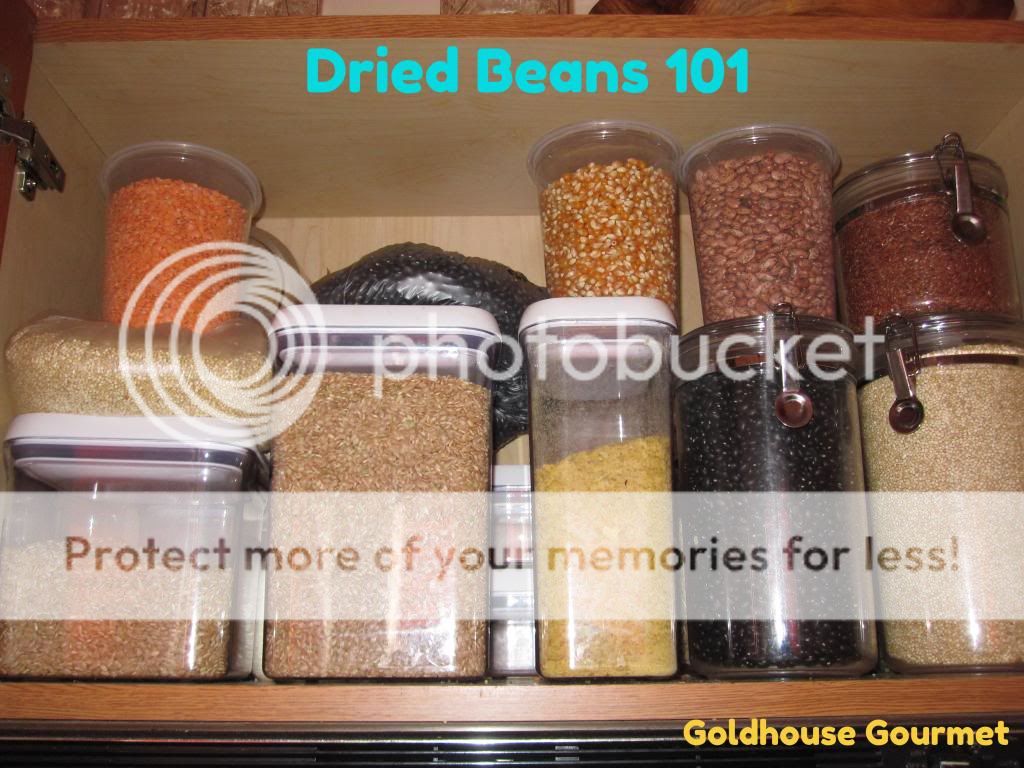
Dried Beans!

     There is so much to love about beans.
     They are nutritional powerhouses. Not only are they loaded with protein, fiber, and tons of vitamins and minerals; they also reduce cholesterol, control blood sugar, and have anti-cancer properties. (I aim to have at least a cup a day.)
     They are widely available and incredibly versatile; you can use them in everything from soups to spreads to salads to sweets.
     AND, they are ridiculously cheap.
     While canned beans are great for putting a last-minute meal together that's inexpensive and healthful, dried beans provide even more bang for your buck, financially and nutritionally. Buying dried beans from the bulk section of the grocery store is probably the cheapest food you can buy (which is why I stock up, as you can see above) and the soaking process makes beans' glorious nutrients more easily absorbable. Plus, there's no denying that beans made from scratch just taste better. The process may seem time-consuming at first, but once you get the system down, you'll realize just how easy and convenient it is.

Step 1: SOAK
Pour the dried beans into a large bowl and cover with water. Soak them for at least 8 hours. Dried beans will expand in water so make sure the water covers the beans by several inches. A good time to put your beans to soak might be either at night before bed or in the morning before heading off to work.

Step 2: DRAIN & REFRESH
Drain the beans from the soaking water and transfer them into a large pot. Fill the pot with enough fresh water to cover the beans by at least 3 inches. Note: People often complain that beans make them undesirably musical (if you catch my drift). This is why we soak and drain. Soaking the dried beans in water allows them to release the indigestible sugars that cause people to feel gassy. When you discard the soaking water, you are also discarding the beans' gas-causing elements.

Step 3: COOK
Bring the pot to a boil and then reduce the heat and cook at a simmer until the beans are tender. See time chart below.

Step 4: STORE
Here's my favorite part: when the beans are done, whatever you don't use right away can be stored in the fridge for up to a week or in the freezer for several months. What I do is make a very large batch of beans and then store recipe-size portions in zip-lock bags in the freezer. This way, they are there whenever I need them and I can get all of the health and cost benefits of making my own beans without having to spend hours ahead of time soaking and cooking them each time I want beans.

BEAN COOKING TIME

Black -  1.5 hours
Black-eyed peas* -  1 - 1.5 hours
Cannellini -  1 hour
Fava, skinned -  1 hour
Garbanzo -  1.5 - 2 hours
Kidney, red -  1 - 1.5 hours
Lentils* -  30 - 45 minutes
Lima -  1 hour
Mung -  1 hour
Navy -  1 - 1.5 hours
Pinto -  1 - 1.5 hours
Split peas, green* -  30 - 45 minutes

* These dried beans don't need to be soaked beforehand. You can just skip ahead to Step 3.

Read more about the health benefits of beans HERE.

Disease Prevention for Breakfast


    Google image search "American breakfast" and you'll see a pretty sorry state of affairs. You'll see bacon strips, scrambled eggs, fried eggs, sausage, fried hash browns, fried ham, pancakes with butter, waffles with butter, toast with butter, buttered croissants, bagels with cream cheese... you get the idea. Google image search "healthy american breakfast" and you'll see practically the same thing. You'll get a couple more shots of orange juice (which by definition has been entirely striped of fiber) and some shots of highly refined cereal floating in bowls of dairy milk, but essentially the same thing. No greens, almost no fresh fruit, and A LOT of meat, dairy, eggs, refined flour, refined sugar, and salt.
     This is absurd when diet is responsible for four out of the top five leading causes of death in America. As Dr. Mark Hyman explains, "the research clearly shows that changing how we live is a much more powerful intervention for preventing heart disease [currently the number one killer of Americans] than any medication." The "EPIC" study published in the Archives of Internal Medicine studied 23,000 people's adherence to 4 simple behaviors (not smoking, exercising 3.5 hours a week, eating a healthy diet [fruits, vegetables, beans, whole grains, nuts seeds, and limited amounts of meat], and maintaining a healthy weight. In those adhering to these behaviors, 93% of diabetes, 81% of heart attacks, 50% of strokes, and 36% of all cancers were prevented.
     We know Americans don't want to suffer and die from these diseases; after all, we spend an exorbitant amount of our personal and national finances on prescription drugs, medical procedures, and research to treat them. So why do we continue to eat in a way that contributes to the very diseases we are spending so much money to treat? It's as if we believe our only chance at good health is to sit around and wait for cures to be discovered. This hopelessness and helplessness leaves us completely dependent on doctors, hospitals, drug companies, and research labs--which is very nice for them and their wallets but not so nice for our health, our wallets, or the country.
     Why have so many of us been led to believe we have no power over our own health? Why are too many of us still tragically unaware (as I was for so long) of the role diet plays in determining whether or not we get cardiovascular disease, cancer, osteoporosis, and a number of other diseases?
    In hindsight, it would be way too easy for me to say, "well, the information is out there. If people really cared about their health, they wouldn't be eating meat, dairy, and eggs." But I don't think it's that simple. While, indeed, research has proven time and time again that animal products promote disease while fruits and vegetables prevent disease, not many people know this. We hear mixed messages from advertisements ("Milk. It Does a Body Good."), from fad diets (Atkins), from our parents (who were misled by their parents), and from myths passed amongst our peers ("Humans are meant to eat animals. Look at our pointy fangs!" ). Most insidious, though, are the messages we receive from the medical industry itself which consistently plays down the power of eating for disease prevention.
     Why are doctors all too eager to write us prescriptions for high cholesterol, screen us repeatedly with expensive medical equipment for cancer (which is NOT prevention, just detection), perform surgeries to unclog our hearts, or put us through chemotherapy, but they'll rarely advise us to drastically change our diets? I find the explanation that "most people refuse to make drastic lifestyle changes" to be both patronizing and false. Perhaps some people may refuse to make changes in their diet, but we all deserve to make an informed choice. Plus, I believe most people would prefer not to spend gobs of money unnecessarily, or get their chest cut open unnecessarily, or get cancer and endure chemo unnecessarily, or DIE unnecessarily. Based on my experience, I believe plenty of people would much prefer to make dietary changes if the truth were pushed on them even half as much as prescriptions are.
     Why is the link between diet and disease so rarely mentioned?

Book Recommendation: "Artisan Vegan Cheese"

    "I could never give up cheese."
     Based on the frequency that I hear this, I thought about making this post all about the reasons why you should stop eating cheese yesterday. I could have written about how detrimental animal cheese is to your health, delving into the link between dairy products and various types of cancer, including breast, ovarian and prostate. I could have discussed how dairy is actually really bad for your bones. After all, countries with the lowest rates of dairy consumption have the lowest rates of osteoporosis and that dairy has actually been singled out as the biggest cause of osteoporosis. I could have gone over the fact that a whopping 75% of the world's population are genetically unable to digest dairy, yet we label this near universal human trait a defect and call it "lactose intolerance." When we are babies all humans have an enzyme that allows us to digest our mother's milk but we lose that enzyme between ages two and five because we are supposed to be weaned by then. Our bodies weren't designed to be consuming milk into adulthood (not to mention the milk of another species!). I could also have also told you about how the veal industry is the byproduct of the dairy industry. In order to produce milk, cows--like humans--have to be pregnant and give birth. That means every glass of milk, every slice of cheese, and every scoop of ice cream is the product of a mother cow enduring a nine-month pregnancy only to have her baby immediately taken from her at birth so humans can consume her milk. If her baby is a male, he is slaughtered as veal. If her baby is a female, she is condemned to the same agonizing fate as her mother. To keep a dairy cow producing milk, she must constantly be pregnant, so just after her baby is torn away from her she is impregnated again. The painful cycle then repeats, year after year, until her body can give no more and she too is slaughtered.
     But I'm not going to make this post about why you should give up cheese.
     Instead, thanks to the brilliant book Artisan Vegan Cheese by Miyoko Schinner, I'll simply tell you that you don't have to give up cheese because you can make your own unbelievably delicious plant-based cheese. I have spent the past several weeks making eight different vegan cheeses from this book and, as a former dairy cheese lover myself, I am thoroughly impressed. Some of the recipes take a few minutes to prepare while others take a few weeks, even months, to culture but what consistently manifests are complex plant-based cheeses that are strikingly similar to their dairy counterparts. The first time I sampled the cashew-based mozzarella I was so startled at how similar it was to the dairy-based version that I had keep reminding myself that it was vegan and that I needn't resist it. It was pretty wild.
     Pictured above is a caprese salad with Schinner's mozzarella recipe which I served during our at-home fancy date night this weekend. Below is a brie which I had out while our non-vegan friend was visiting from out of town. We all agreed it was a hit. It was creamy, fancy, and had that perfect melt-in-your-mouth texture. I've also got parmesan, provolone, gouda, two types of cheddar, American, and cream cheese in the works. (Click "read more" below for the recipe for American cheese.)

Incredibly Easy Pumpkin Chili

     Believe it or not, I used to hate cooking. I resented having to follow directions for an activity that I believed was meant be creative. But every time I tried to get creative, tossing in a little of this, a dash of that, followed by a twirl, a curtsey, etc., the food was just a sorry disappointment. After too many failed dishes I knew I needed to follow instructions but I still wanted to feel like the dish was my creation. I was able to find a happy balance making dishes that called for just a few ingredients and minimal measuring. For those who are new to cooking, short on time, or just looking for a unique take on chili, this recipe delivers. It is so simple. All you have to do is chop a few vegetables and dump a few cans, but it also feels really creative and unusual because of the pumpkin. The result is a delicious chili that's warm, comforting, and just a touch sweet.
     Over time, you could also get more creative and try adding different colored peppers, other kinds of beans, or using sweet potato instead of pumpkin (see below for more ideas). With such good and simple flavors it would hard to mess this one up.

Ingredients:
1 onion, diced
2 cloves garlic, diced
1 red bell pepper, diced
1 can (15 oz) organic corn, preferably sweet
1 large can (28 oz) fire-roasted diced tomatoes
1 can pumpkin puree (NOT pumpkin pie puree)
1 can chickpeas, drained
1 can black beans, drained
1 tbsp chili powder
2 tsp cumin
1/4 tsp cayenne (optional)
1 cup vegetable broth or water (more if you prefer a thinner consistency)

Instructions:
1. In a large skillet over medium heat, saute the onion, garlic, and red pepper in 1-2 tbsp water or vegetable broth for about 10 minutes or until tender.
2. Stir in the remaining ingredients, increase the heat to high, and bring to a boil.
3. Immediately reduce the heat to medium-low and simmer for 15-20 minutes until heated through. Serve hot.

Variations to try:
- To make this chili thicker and heartier, add 2 cups cooked quinoa after step 2.
- Add fresh or frozen de-thawed greens, such as kale, spinach, collards, etc., while simmering during step 3.
- For a slightly sweeter chili, use canned sweet potato instead of pumpkin.
- Double or triple the ingredients to make several days' worth of food. Leftovers can also be frozen. 
- Try using just one kind of bean (for example, only black beans) or add several different kinds in addition to the beans already used (such as pinto, kidney, and white beans).

"I tried being vegan but..."

Below I examine to some of the common pitfalls of those who say a plant-based diet didn't work for them.

1. "... I felt really weak."
What causes people to feel weak? This is often the result of not consuming enough calories. Animal products don't have some magic source of energy. After all, people who suffer from anorexia and eat nothing but steamed chicken's breast, sugar-free gum, and egg whites also experience weakness and lethargy. Being vegan doesn't cause anyone to feel weak, not eating enough calories does. However, plants do have less calories than animal products so if you simply eliminate the animal products from your diet and don't add other foods instead, then yes, you may start feeling lethargic, but that's only because you are consuming less calories. To make up for the loss in calories, eat more! Eat larger portions, eat more frequently, or eat more nutrient and calorie-dense foods with your meals. Try adding healthful fats like avocado, walnuts, or flaxseeds to a salad. Make a smoothie with canned sweet potato, peanut butter, oatmeal, dates and soy milk. Add tofu and sesame seeds to a stir-fry. Snack on almonds and dates.
Bottom line: If you are feeling weak, eat more.

2. "... my body just craved meat."
Did it really, though? When you saw road kill did you instantly salivate? Did you find yourself looking at your dog and begin to wonder how she'd taste on the grill? My guess is no, you didn't. No human craves a piece of actual animal flesh the way a true carnivore does. We're repulsed by the idea of eating a piece of flesh that's raw, bloody, and covered with feathers or fur. And we have to cook flesh before we eat it in order to make it non-lethal to our digestive system. When we say we're craving bacon or steak what we're actually craving is the salt, the fat, or the chewiness, not the flesh itself. Fortunately, the flavors people enjoy when eating animal flesh are plant-based (i.e. ketchup, mustard, horseradish, barbecue sauce, soy sauce, wasabi, relish, onions, pickles, garlic and countless herbs and spices) which means these cravings can be satisfied without taking another's life. (See Tempeh Bacon and BBQ Tofu.)
   I also wonder about this whole "listen to your body" idea. That's not always such a good credo to live by. After all, people's impulses also tell them to hit, rape, murder, steal, and destroy. Even the most well-behaving people have at some point had the impulse, even if just for a fleeting moment, to do something crazy or harmful. Should we really listen to every impulse simply because it's there? I thought we humans prided ourselves on being rational and moral creatures. All humans are omnivores which means we are physically capable of eating plants and animals. It means we don't have to eat animals. It means we have a choice. Every one of us is physiologically capable of surviving on plants. Why would we choose to harm when don't have to?
Bottom line: Don't base your actions on cravings and impulses alone.

3. "... my doctor told me I have to eat meat."
You'd think that doctors would be experts in nutrition, but alas, they aren't. In medical school students receive little to no education on nutrition. Instead the emphasis is on drugs and surgery for the treatment of disease rather than on prevention and the importance of lifestyle in good health. This is for a number of reasons, one of which is there's little money to be gained in advocating prevention. The medical and pharmaceutical industries benefit when people need their services and products, not when they don't. Bias plays a role as well. Most medical students and doctors grew up eating animal products and aren't eager to find evidence that contradicts their own lifestyle and habits. After all, doctors used to advocate smoking cigarettes for patients because they smoked cigarettes themselves.
     John Robbins, in Diet For A New America, explains: "Today, a similar situation exists with respect to the health consequences of a meat habit. Today's physician is exposed to the same propaganda promoting meat and dairy product consumption as the rest of us, and he hasn't the nutritional training that would enable him to evaluate these messages any more intelligently than we can. Furthermore, the meat, egg, and dairy industries are particularly keen on 'educating' doctors with their biased view of nutrition. The Meat Board, for example, has presented a series of extremely expensive full page color ads in the Journal of the American Medical Association, presenting a nutritional slant that one nutritional authority, Dr. Kenneth Buckley, did not find at all impressive. He called it: 'slick and deceitful propaganda, coloring and twisting the facts in the most manipulative way.'"
Bottom line: Find a doctor who is vegan or at least wont let his or her own biases influence you.

4. "... I started gaining weight."
A healthful vegan diet is centered around on whole foods. What are whole foods? These are foods that haven't been refined or processed. The produce aisle is where you'll find the whole food heaven-- colorful fruits and vegetables in their natural state. You'll even find whole foods elsewhere in the supermarket. Look for dried beans and legumes, seeds, nuts and unrefined whole grains like brown rice, quinoa, barley, amaranth and oats. If you eat a diet primarily of whole foods it would be very difficult to gain weight. However, if you eat a vegan diet full of refined carbohydrates it would be very difficult NOT to gain weight. You'll likely also feel tired and cranky because these foods have been so processed that they are virtually devoid of vitamins and minerals. Foods made with white flour, such as cookies, cakes, breads, and crackers fall into this category, as do grains no longer in their whole form like white rice and most packaged breakfast cereals. Also on the processed list are sugar, corn syrup, soda, pasta, anything fried, candy and alcohol. Fruits and vegetables are refined in the form of juice, jellies, french fries, potato chips, wine, and canned fruit. While these "foods" may be vegan and are okay once in a while, if you ate them frequently, being vegan didn't make you gain weight; eating a diet high in processed foods did.
Bottom line: Center your diet around whole foods to maintain a healthful weight.

5. "... I got tired of having to cook a vegan meal for myself and a non-vegan meal for my family every night."
I hear this almost exclusively from women and it makes me really sad. As women we are so expected to be the care-takers and nurturers of those around us. Regardless of whether or not you like being in that role, being a nurturer does not mean giving others whatever they want at the expense of your time and your values. It really doesn't matter what someone "expects." No one is entitled to a particular ingredient or product every night, especially if they aren't making it themselves, so if you are cooking meals for others they should be receiving them with gratitude. Period. Plus, when you make vegan food for others--which is without artery-clogging cholesterol, carcinogens, and harmful animal protein--you are also demonstrating that their health and their lives matter to you. If they still insist on making dietary choices that are harmful, they can do that on their own time, but no one has the right to force you to be an accomplice. Keep in mind though, this may be easier than you think.
Bottom line: As Colleen Patrick-Goudreau says, "the surest way to inspire people to eat delicious plant-based food is to make delicious plant-based food... If people eat food they find satisfying, filling, familiar, and tasty, they wont care if it has no animals in it."

Addition: I just came across a wonderful essay but Will Tuttle, PhD which I recommend people read here.

The Hunting Excuse/Myth

     I recently received an inquiry about my thoughts on an article about hunting. In the article, the author states that "the production of soy and tofu on an industrial scale requires quite a lot of killing," as millions of animals, including deer, birds, mice, and squirrels are "shot, trapped and poisoned by the millions every year in North America for the sole purpose of protecting crops." The author argues that, therefore, the more ethical thing for us humans to do is to kill deer by our own hands (or guns, rather, but never mind).
     First of all, I would like to point out that the number one consumer of soy are farmed animals! If the author is concerned about the many animals who are killed growing soy then he should absolutely abstain from animal products. Period. The end.
     But let me address some other points about hunting, because I get asked about this topic a lot. First, whenever someone brings up hunting as a way of challenging veganism, I'm always inclined to ask, do YOU hunt? For the vast majority of people the answer is no, which makes me wonder why we're even having this conversation in the first place. After all, only 7% of the US population hunts. But if you do hunt, my next question is, so does your meat consumption consist only of the animals you have hunted? The hunters I know do not abide by a strict my-kill-only policy regarding what they eat. They don't go to restaurants and ask if all the meat on the menu came from hunted animals. Nor do they go to a friend's home for dinner and refuse to eat the hostess's pork chops unless they came from a hunted pig. While I certainly don't claim to know all the hunters in the world, I have never met or even heard of a hunter who has eliminated dairy, butter, eggs or cheese from their diet even though these products come from animals who most certainly are not hunted (cows and chickens). So even for most hunters, the "hunting excuse" doesn't hold much water.

"But I buy local!"

     When I tell people that being vegan is the best thing one can do for the environment I often hear a response like, "Well, I'm not vegan but that's okay because I buy all my food from local farms."
     People (myself included!) like to pat themselves on the back for eating local. And in many respects that pat is well deserved. Buying locally grown food keeps money within the community, it's a way of showing support for small businesses over large corporations, provides less opportunity for the contamination that leads to massive recalls, and allows you to celebrate the seasons and products unique to your region.
     But that's if we're talking about produce. To an animal whose life was taken, whether he was slaughtered for a local buyer or not doesn't really matter to him. And despite what many well-intentioned people may think, it doesn't really matter all that much to the environment either. While eating local is great, what we eat matters much more, environmentally speaking.
     This is because the majority of greenhouse gases released from the entire food process come from the production, not the transport. Specifically, nitrous oxide and methane, inadvertently produced by fertilizers (for animal feed crops), manure, and gas expelled during the animals' digestion account for a large portion of the CO2-equivalent gases created during production. The delivery-- that is, the transport of food from the producers to the retailers-- contributes only 4% of the greenhouse gasses.
     If you eat an all-local diet, you save the greenhouse gas equivalent of driving 1,000 fewer miles a year. But if you were to eat a vegan diet just one day a week, you would save the equivalent of driving 1,160 fewer miles a year. So in terms of greenhouse gases, eating vegan one day a week is better than eating local every single day of the year.
    Can you imagine the impact you could make by eating vegan every single day of the year, both for the animals and for the environment?

Check out this fascinating study by Carnegie Mellon University: "Food-Miles and the Relative Climate Impacts of Food Choices in the United States"